
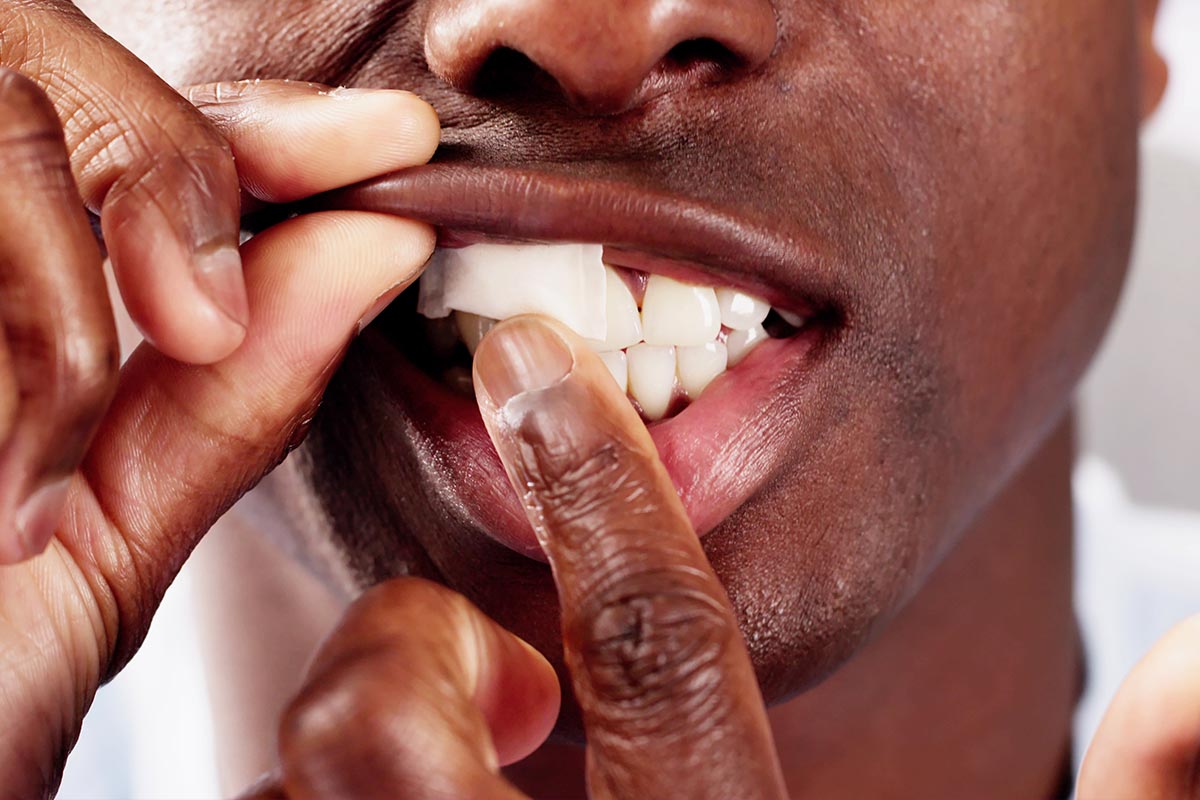
When you place a nicotine pouch between your lip and gum, a sophisticated pharmacological process begins. Unlike smoking or vaping, which deliver nicotine through the lungs, nicotine pouches rely on transmucosal absorption – the direct uptake of nicotine molecules through the delicate tissues of your oral cavity. Understanding how this process works reveals why nicotine pouches have become one of the most efficient tobacco-free delivery systems available.
This article explores the precise mechanisms of nicotine absorption from pouches, from the molecular level to systemic circulation. We’ll examine the role of pH in absorption rates, compare nicotine salt formulations to freebase nicotine, analyze blood plasma concentration curves, and contrast oral mucosal delivery with pulmonary absorption from smoking and vaping.
The Oral Mucosa: Your Body’s Absorption Gateway
The oral mucosa – the moist tissue lining your mouth – is perfectly engineered for drug absorption. This epithelial membrane consists of multiple layers: a superficial keratinized layer (in some regions), a non-keratinized epithelium, and an underlying highly vascularized lamina propria.
When you use a VELO nicotine pouch or similar product, nicotine molecules must cross this mucosal barrier to reach the capillary network beneath. The absorption occurs primarily through two routes:
Buccal vs. Sublabial Absorption
Buccal absorption refers to uptake through the cheek lining, while sublabial absorption occurs beneath the upper or lower lip. Both sites offer distinct advantages:
- Sublabial region (where most users place pouches): Thinner epithelium with rich capillary density, allowing faster initial absorption. This is why VELO pouches in Canada are designed to sit comfortably in this position.
- Buccal region: Slightly thicker but more permeable in some areas, providing sustained absorption over time.
- Sublingual region (under the tongue): The most permeable oral site, though less commonly used for pouches due to comfort concerns.
Research published in The Journal of Pharmacology and Experimental Therapeutics demonstrates that oral mucosal permeability varies significantly by location, with sublingual tissue showing 4-4.4 times greater permeability than buccal tissue for many compounds, though nicotine absorption is robust across all oral sites.
The Molecular Journey: How Nicotine Crosses Cell Membranes
Nicotine absorption through oral mucosa follows well-established pharmacokinetic principles. The molecule (C₁₀H₁₄N₂) exists in two forms depending on pH: ionized (charged) and un-ionized (uncharged). Only the un-ionized, lipophilic form can easily cross cell membranes.
The pH-Absorption Relationship
Nicotine has a pKa of approximately 8.0, meaning at physiological pH (around 7.4), roughly 31% exists in the un-ionized, membrane-permeable form. This is where pouch formulation becomes critical.
Many modern nicotine pouches use pH buffering agents to optimize absorption:
- Neutral to slightly alkaline pH (7.5-8.5): Increases the proportion of un-ionized nicotine, accelerating absorption across the lipid membrane barrier.
- Lower pH formulations (6.5-7.0): Reduce initial absorption speed but may decrease irritation for sensitive users.
A 2021 study in Nicotine & Tobacco Research found that pouches buffered to pH 8.5 delivered nicotine to blood plasma 23% faster than those at pH 7.0, though total bioavailability remained similar over the full absorption period.
Traditional snus products often achieve pH levels of 8.0-8.5 through tobacco alkaloids and added sodium carbonate. Modern tobacco-free pouches like VELO Freeze use alternative buffering systems to achieve similar pH optimization without tobacco.
Nicotine Salt vs. Freebase: Chemical Forms and Absorption Rates
The chemical form of nicotine significantly impacts absorption kinetics. Understanding the difference between nicotine salts and freebase nicotine is essential to grasping how modern pouches work.
Freebase Nicotine
Freebase nicotine is the deprotonated, alkaline form of the molecule. It’s highly lipophilic and crosses membranes rapidly, but it’s also harsh on tissues at higher concentrations. Most traditional tobacco products and some early nicotine pouches used primarily freebase nicotine.
Nicotine Salts (Protonated Nicotine)
Nicotine salts are formed when nicotine base is combined with an acid (commonly benzoic acid, citric acid, or tartaric acid). This protonation creates a more stable molecule that:
- Reduces harshness and irritation
- Allows higher nicotine concentrations without discomfort
- May slightly slow initial absorption but enables sustained delivery
- Provides a smoother sensory experience
Research from the University of California, San Francisco found that nicotine salt formulations (specifically nicotine benzoate) in e-cigarettes produced blood nicotine levels comparable to combustible cigarettes, despite lower temperatures. While this research focused on inhalation, the principle applies to oral absorption: the salt form doesn’t prevent absorption but may modulate the rate and reduce irritation.
Many premium pouch brands use a blended approach – combining nicotine salts for smoothness with optimized pH buffering to ensure adequate freebase conversion at the mucosal surface. For more on this chemistry, see our detailed guide on nicotine salt vs freebase nicotine.
Blood Plasma Curves: Tracking Nicotine in Your Bloodstream
Pharmacokinetic studies measure nicotine delivery by tracking plasma nicotine concentration over time. These blood plasma curves reveal critical information about absorption rate, peak concentration (Cmax), time to peak (Tmax), and overall bioavailability.
Typical Nicotine Pouch Pharmacokinetic Profile
A landmark 2020 study published in Psychopharmacology compared the pharmacokinetics of modern nicotine pouches to other nicotine products:
- Onset of absorption: Detectable plasma nicotine within 5-10 minutes
- Tmax (time to maximum concentration): 30-60 minutes for most pouch products
- Cmax (maximum plasma concentration): Varies by strength; 6 mg pouches typically produce 10-15 ng/mL, while higher-strength products can reach 20-30 ng/mL
- Duration of elevated levels: Nicotine remains elevated for 2-4 hours depending on usage duration
Notably, keeping the pouch in longer increases total nicotine delivery. Swedish studies show that using a pouch for 60 minutes delivers approximately 30-40% more total nicotine than 30-minute use, though the rate of increase slows after the first 30 minutes.
The absorption curve for nicotine pouches shows a gradual rise and sustained plateau, contrasting sharply with the rapid spike-and-drop pattern of smoking. This difference has significant implications for satisfaction and craving relief, which we explore in our article on how fast nicotine pouches work.
Bioavailability and Systemic Delivery
Bioavailability refers to the proportion of administered nicotine that reaches systemic circulation. For nicotine pouches, oral mucosal absorption offers several advantages:
- First-pass metabolism bypass: Unlike swallowed nicotine (from gum or lozenges), which undergoes hepatic first-pass metabolism, nicotine absorbed through oral mucosa enters the jugular vein and goes directly to systemic circulation, improving bioavailability.
- Estimated bioavailability: 60-80% for properly formulated pouches, compared to 20-45% for nicotine gum (much of which is swallowed) and approaching 80-90% for Swedish snus.
- Individual variation: Salivary flow rate, pH, and mucosal health can affect individual absorption rates by 20-30%.
For a deeper dive into these concepts, see our comprehensive guide on nicotine bioavailability across different delivery methods.
Comparing Absorption Routes: Oral vs. Pulmonary Delivery
Understanding how oral mucosal absorption differs from pulmonary (lung) absorption illuminates the fundamental pharmacological differences between pouches and smoked or vaped products.
Pulmonary Absorption: Smoking and Vaping
When nicotine is inhaled via smoking or vaping:
- Absorption surface: The vast alveolar surface area of the lungs (approximately 70 square meters) allows extremely rapid absorption.
- Speed: Nicotine reaches the brain in 10-20 seconds via pulmonary venous return to the left heart, then direct arterial distribution to the brain.
- Arterial bolus: Smoking creates a sharp arterial “spike” of nicotine – brief but intense – that activates nicotinic acetylcholine receptors rapidly and reinforces addictive behavior patterns.
- Cmax: Typically 15-30 ng/mL after a cigarette, achieved in 5-10 minutes.
- Tmax: 5-10 minutes, much faster than oral absorption.
Oral Mucosal Absorption: Nicotine Pouches
Oral absorption follows a different pattern:
- Absorption surface: Limited to the contact area of the pouch (a few square centimeters of oral mucosa).
- Speed: First-pass to venous return, then gradual arterial distribution; no direct arterial bolus to the brain.
- Venous return: Absorbed nicotine enters the jugular vein, travels to the right heart, through pulmonary circulation, back to the left heart, then to systemic arteries – a longer path that dilutes and temporally spreads nicotine delivery.
- Plateau delivery: Gradual rise over 30-60 minutes to a sustained plateau rather than sharp spike.
- Receptor activation: Smoother, more consistent nicotinic receptor activation with less reinforcement of rapid-reward addiction patterns.
Research from the National Institute on Drug Abuse (NIDA) indicates that the speed of nicotine delivery to the brain is a key factor in addiction potential. The rapid arterial spike from smoking is far more reinforcing than the gradual venous delivery from oral products.
This pharmacokinetic difference explains why products like VELO Max Freeze can deliver substantial nicotine doses with less addictive reinforcement than cigarettes delivering similar amounts. We cover this comparison in detail in our article on VELO vs cigarettes nicotine delivery.
Practical Implications
These absorption differences have real-world consequences:
- Craving relief: Pouches take longer to relieve acute cravings (30-60 minutes vs. 5-10 for smoking) but provide longer-lasting satisfaction.
- Harm reduction: Eliminating combustion and inhalation removes thousands of toxic compounds while maintaining effective nicotine delivery.
- Addiction profile: The absence of rapid brain nicotine spikes may reduce the behavioral reinforcement that drives compulsive use patterns, though nicotine itself remains addictive via any route.
- User adaptation: Former smokers switching to pouches often need 1-2 weeks to adapt to the different pharmacokinetic profile and satisfaction pattern.
For more on how pouches compare to vaping from a scientific perspective, see nicotine pouches vs vaping: delivery and safety science.
Factors That Influence Absorption Rate
Individual variation in nicotine absorption can be substantial. Several factors modulate how efficiently your body absorbs nicotine from pouches:
1. Pouch Placement and Contact Area
The specific location and pressure of pouch placement affects contact area and tissue compression, both of which influence absorption. Sublabial placement (upper lip) typically provides optimal balance of comfort and absorption.
2. Saliva Production and pH
Saliva dissolves nicotine from the pouch material and creates the aqueous interface for mucosal absorption. Higher saliva flow increases nicotine dissolution but may also increase swallowing (reducing bioavailability). Individual salivary pH can vary from 6.2 to 7.6, affecting the ionization equilibrium.
3. Pouch Moisture Content
Modern pouches come in various moisture formats:
- Dry pouches: Rely entirely on salivation, slower initial release but less drip
- Moist pouches: Pre-moistened for immediate nicotine release and faster absorption
- Optimal pouches: Balanced moisture for controlled release kinetics
4. Previous Nicotine Exposure and Tolerance
Chronic nicotine users develop metabolic tolerance through upregulated CYP2A6 enzyme activity, leading to faster nicotine clearance and potentially altered subjective effects at similar plasma concentrations. Learn more in our article on nicotine tolerance mechanisms.
5. Genetic Factors
Genetic polymorphisms in the CYP2A6 gene significantly affect nicotine metabolism rates. “Slow metabolizers” (about 15-20% of Caucasian populations) may experience longer nicotine half-lives and more sustained plasma levels from a single pouch.
6. Oral Health and Mucosal Integrity
Healthy, intact oral mucosa absorbs nicotine most efficiently. Oral lesions, inflammation, or xerostomia (dry mouth) can impair absorption. Conversely, minor gingival inflammation may paradoxically increase permeability in some cases.
Nicotine Elimination: The Back Half of the Curve
Understanding absorption is incomplete without considering elimination. After peak plasma concentration, nicotine undergoes:
- Primary metabolism: Hepatic conversion to cotinine (70-80% of nicotine) via CYP2A6 enzyme
- Cotinine half-life: 16-20 hours (much longer than nicotine’s 2-hour half-life), making it a useful biomarker for nicotine exposure
- Renal excretion: pH-dependent urinary elimination of unchanged nicotine and metabolites
The relatively short nicotine half-life (approximately 2 hours) explains why nicotine levels drop significantly 3-4 hours after pouch removal, though subjective effects may persist longer. For detailed information, see our guide on nicotine half-life and metabolism.
The Clinical Significance: Why This Science Matters
Understanding nicotine absorption mechanisms from pouches has important implications:
- Harm reduction strategy: For smokers, switching to oral nicotine products eliminates combustion toxicants while maintaining effective nicotine replacement. Public Health England and the Royal College of Physicians recognize oral nicotine products as substantially less harmful than smoking.
- Product development: Manufacturers can optimize pH, nicotine form, moisture content, and pouch materials to balance efficacy, comfort, and safety.
- Regulatory science: Health authorities need accurate pharmacokinetic data to assess product risks and benefits. Health Canada’s nicotine pouch regulations reflect evolving understanding of oral nicotine delivery.
- Consumer understanding: Knowing how and why pouches work differently from smoking helps users set realistic expectations and optimize their usage patterns.
When you buy VELO nicotine pouches in Canada, you’re using a delivery system refined by decades of Swedish snus research and modern pharmaceutical engineering – a far cry from the crude tobacco products of the past.
Related Guides
Frequently Asked Questions
How is nicotine absorbed from nicotine pouches?
Nicotine is absorbed through the oral mucosa (the moist tissue lining your mouth) via transmucosal absorption. When a pouch sits between your lip and gum, saliva dissolves nicotine from the pouch material. The un-ionized (uncharged) form of nicotine crosses cell membranes in the oral epithelium and enters the rich capillary network beneath, where it’s carried into systemic circulation via the jugular vein. This process typically begins within 5-10 minutes, with peak blood levels reached in 30-60 minutes.
What role does pH play in nicotine absorption from pouches?
pH is critical because nicotine (pKa ~8.0) exists in both ionized (charged) and un-ionized (uncharged) forms depending on pH. Only the un-ionized, lipophilic form easily crosses cell membranes. At neutral pH (7.0), about 9% of nicotine is un-ionized; at pH 8.0, approximately 50% is un-ionized; at pH 8.5, about 76% is un-ionized. Most modern pouches use buffering agents to raise pH to 7.5-8.5, significantly accelerating absorption. Studies show pH 8.5 formulations deliver nicotine to blood plasma 23% faster than pH 7.0 formulations.
How does nicotine absorption from pouches compare to smoking?
Smoking and pouches deliver nicotine through entirely different routes. Smoking uses pulmonary (lung) absorption: nicotine reaches the brain in 10-20 seconds via arterial blood, creating a rapid “spike” that strongly reinforces addiction. Pouches use oral mucosal absorption: nicotine enters venous blood, travels through the heart and lungs before arterial distribution, taking 30-60 minutes to reach peak levels with a gradual plateau rather than a spike. This slower, smoother delivery is less addictively reinforcing but provides longer-lasting satisfaction. Both can deliver similar total nicotine amounts, but the pharmacokinetic profiles differ dramatically.
What’s the difference between nicotine salt and freebase nicotine in pouches?
Freebase nicotine is the deprotonated, alkaline form – highly lipophilic and fast-absorbing but harsh at high concentrations. Nicotine salts are formed by combining nicotine with acids (like benzoic or citric acid), creating protonated nicotine that’s smoother and less irritating, allowing higher nicotine concentrations comfortably. While nicotine salts may slightly slow initial absorption, many modern pouches use blended formulations: nicotine salts for smoothness combined with pH buffering to ensure adequate conversion to freebase at the mucosal surface for efficient absorption. This provides both comfort and effectiveness.
How long does it take for nicotine from a pouch to reach peak blood levels?
For most nicotine pouches, time to maximum plasma concentration (Tmax) is 30-60 minutes. You’ll begin absorbing nicotine within 5-10 minutes (detectable in blood), but peak levels occur after 30-60 minutes of use. The exact timing depends on pouch formulation (pH, moisture, nicotine form), placement location, individual salivary flow, and other factors. Keeping the pouch in longer (up to 60 minutes) increases total nicotine delivery by approximately 30-40% compared to 30-minute use, though the rate of increase slows after the first 30 minutes.
What is the bioavailability of nicotine from oral pouches?
Bioavailability refers to the percentage of administered nicotine that reaches systemic circulation. Nicotine pouches typically achieve 60-80% bioavailability. This is significantly higher than nicotine gum (20-45%), much of which is swallowed and undergoes first-pass hepatic metabolism. Oral mucosal absorption bypasses first-pass metabolism – absorbed nicotine enters the jugular vein directly rather than going through the liver first. Bioavailability approaches that of Swedish snus (70-90%), making modern pouches highly efficient nicotine delivery systems. Individual variation of 20-30% occurs due to differences in salivary pH, flow rate, and mucosal health.
Can you increase nicotine absorption from pouches?
Several factors can optimize absorption within safe limits: (1) Placement – sublabial (upper lip) placement typically provides best absorption due to thin, vascularized tissue; (2) Duration – keeping pouches in for 45-60 minutes rather than 20-30 minutes increases total absorption; (3) Hydration – adequate saliva production helps dissolve nicotine, so stay hydrated; (4) Minimize swallowing – excessive swallowing reduces bioavailability as swallowed nicotine undergoes first-pass metabolism; (5) Avoid acidic beverages immediately before/during use, as they can lower oral pH and reduce absorption. However, do not attempt to artificially raise oral pH or modify pouches – use products as directed.
Conclusion: The Science Behind the Satisfaction
Nicotine absorption from pouches represents a sophisticated intersection of chemistry, physiology, and pharmaceutical engineering. The journey from pouch to bloodstream involves pH-dependent ionization, transmucosal passive diffusion, capillary uptake, and systemic circulation – all optimized to deliver nicotine efficiently while eliminating the toxic combustion products of smoking.
Understanding these mechanisms explains why pouches feel different from cigarettes despite delivering similar nicotine amounts. The gradual venous absorption, sustained plasma levels, and absence of arterial bolus delivery create a fundamentally different pharmacokinetic – and experiential – profile.
As research continues to refine our understanding of oral nicotine delivery, products like VELO Polar Mint and other modern pouches benefit from decades of Swedish snus science combined with contemporary pharmaceutical formulation techniques. The result is a tobacco-free product that delivers nicotine with high bioavailability, controlled kinetics, and substantially reduced harm compared to combustible tobacco.
Whether you’re a researcher, healthcare provider, former smoker, or simply curious about how these products work, the science of nicotine absorption reveals why oral pouches have become a leading tobacco harm reduction tool – and why understanding the pharmacology helps users make informed decisions about their nicotine use.
For more information on nicotine pouches, explore our comprehensive guides on what VELO pouches are, VELO ingredients and formulation, and why VELO is tobacco-free. If you’re ready to experience the science of oral nicotine delivery, shop VELO nicotine pouches in Canada today.